Static vs. Dynamic QR Codes: What's the Difference?
Not all QR codes are created equal. Learn the key differences between static and dynamic QR codes, and figure out which type is right for your project.
The Two Flavors of QR Codes
If you've spent any time researching QR codes, you've probably stumbled across the terms "static" and "dynamic." Marketing pages love to throw these words around, often making dynamic codes sound like some premium upgrade you absolutely need. But here's the thing—for most people, static codes work perfectly fine.
Let me break down what each type actually does, so you can make an informed choice instead of paying for features you'll never use.
What Are Static QR Codes?
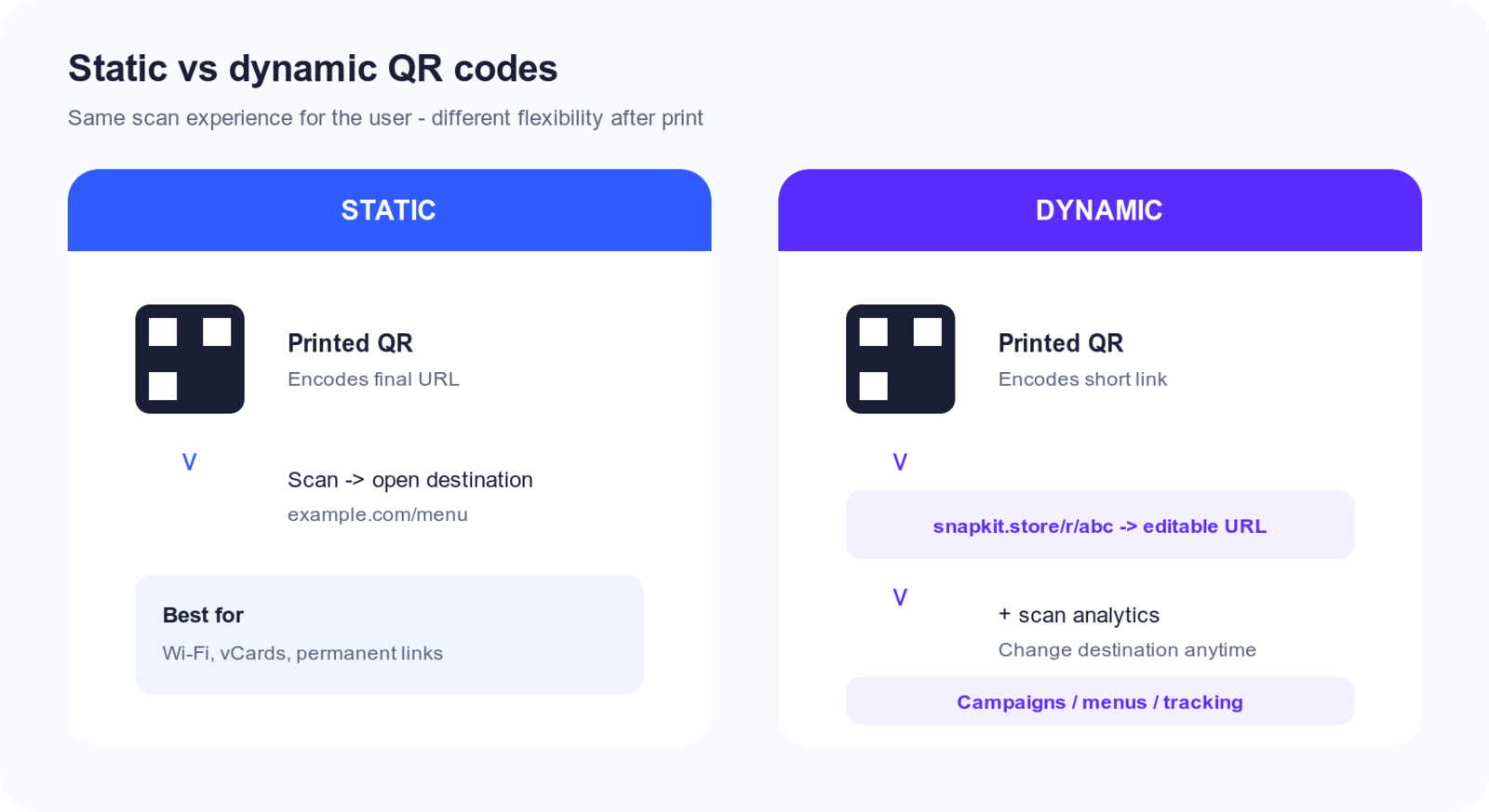
A static QR code is exactly what it sounds like: once you create it, the encoded information is baked in permanently. Scan the code, and it takes you directly to wherever you pointed it—a URL, a block of text, Wi-Fi credentials, whatever you encoded.
Think of it like carving something into stone. The moment you generate that QR code, the destination is locked in. You can print thousands of copies, and every single one will point to the same place forever.
The key characteristics:
- The destination URL or data is embedded directly in the code pattern
- No internet connection required on the generation side (after the initial page load)
- Works indefinitely—there's no server to go offline
- Completely free to create and use
- No tracking or analytics built in
Static codes are what you get from most free QR code generators, including Snapkit. They're straightforward, reliable, and for many use cases, that's all you need.
What Are Dynamic QR Codes?
Dynamic QR codes take a different approach. Instead of encoding your final destination directly, they encode a short redirect URL. When someone scans the code, they hit that redirect URL first, which then forwards them to your actual destination.
It's like giving out a business card with a forwarding address instead of your real address. You can change where that forwarding address points without reprinting the card.
What this enables:
- Change the destination URL anytime without creating a new code
- Track how many times the code was scanned
- See when and where scans happen (rough geographic data)
- A/B test different landing pages
- Set expiration dates or time-based redirects
Sounds pretty slick, right? There's a catch, though.
The Hidden Costs of Dynamic Codes
Dynamic QR codes require a service running in the background. That redirect URL? It's hosted on someone's server. And servers cost money to operate.
This is why most dynamic QR code services charge monthly fees. You're not just paying for the initial code generation—you're paying for ongoing hosting, analytics dashboards, and the infrastructure that makes the redirect work.
Here's what happens if you stop paying: your QR codes stop working. That menu you printed for your restaurant? Dead link. Those business cards you handed out? Useless. The codes don't disappear, but they point to a redirect service that no longer forwards your traffic.
I've seen this bite businesses hard. A local gym printed 5,000 flyers with a dynamic QR code linking to their class schedule. Six months later, they switched QR providers to save money. Every single one of those flyers now leads to a "service unavailable" page.
When Static Codes Make More Sense
For the majority of personal and small business uses, static QR codes are the smarter choice. Here's when I'd recommend them:
Permanent content destinations. If you're linking to your website homepage, a product page, or any URL that isn't going to change, static codes are simpler and more reliable.
Physical prints with long lifespans. Business cards, restaurant menus, product packaging, signage—anything you're printing in bulk and expect to use for months or years. You don't want those tied to a subscription.
One-time or event-based use. Conference badges, wedding invitations, event tickets. These have a fixed purpose and timeframe. No need for ongoing analytics.
When budget matters. Static codes are free. If you're a small operation or just getting started, there's no reason to add recurring costs for features you might not use.
Wi-Fi sharing. You want guests to connect to your network easily. That Wi-Fi password isn't changing often (or at all), so a static code is perfect.
When Dynamic Codes Are Worth It
That said, dynamic codes have legitimate use cases. If your situation fits one of these, the subscription cost might be justified:
Marketing campaigns with multiple iterations. Running ads across different channels and want to test which landing page converts better? Dynamic codes let you swap destinations without reprinting materials.
Short-term promotions. If you're pointing to a seasonal offer or limited-time deal, you might want to redirect to a different page once the promotion ends rather than have scanners hit a dead end.
Enterprise-level tracking requirements. Big companies with dedicated marketing teams often need detailed scan analytics to justify campaign spend. Dynamic codes integrate with their existing analytics workflows.
Situations where mistakes are expensive. If you're printing 100,000 product packages and realize the URL has a typo, being able to fix the redirect saves a very costly reprint.
A Quick Comparison
| Feature | Static QR Codes | Dynamic QR Codes |
|---|---|---|
| Cost | Free | Monthly subscription |
| Edit destination | No (create new code) | Yes, anytime |
| Scan analytics | No | Yes |
| Works offline | Yes, always | Depends on redirect server |
| Lifespan | Permanent | Tied to service subscription |
| Best for | Long-term, permanent links | Campaigns, testing, enterprise |
The Bottom Line
Don't let marketing hype convince you that dynamic QR codes are always better. They're a different tool for different situations.
If you're a restaurant owner printing menus, a professional putting a link on your business card, or anyone creating codes for personal use—static is almost certainly the way to go. It's free, permanent, and you're not dependent on a third-party service staying in business.
Dynamic codes make sense for larger organizations running coordinated marketing efforts where analytics and flexibility justify the ongoing cost. If you need to create or update those codes from your own software, see Can dynamic QR codes be used with an API?.
Need a static QR code right now? Create one here—it takes about five seconds, and it'll work forever.
Looking for dynamic QR codes? We're building dynamic QR code support for Snapkit with scan analytics, editable destinations, and more. Join the waitlist for early access →
Ready to create your QR code?
Try Snapkit's free QR code generator - no signup required.
Generate QR Code